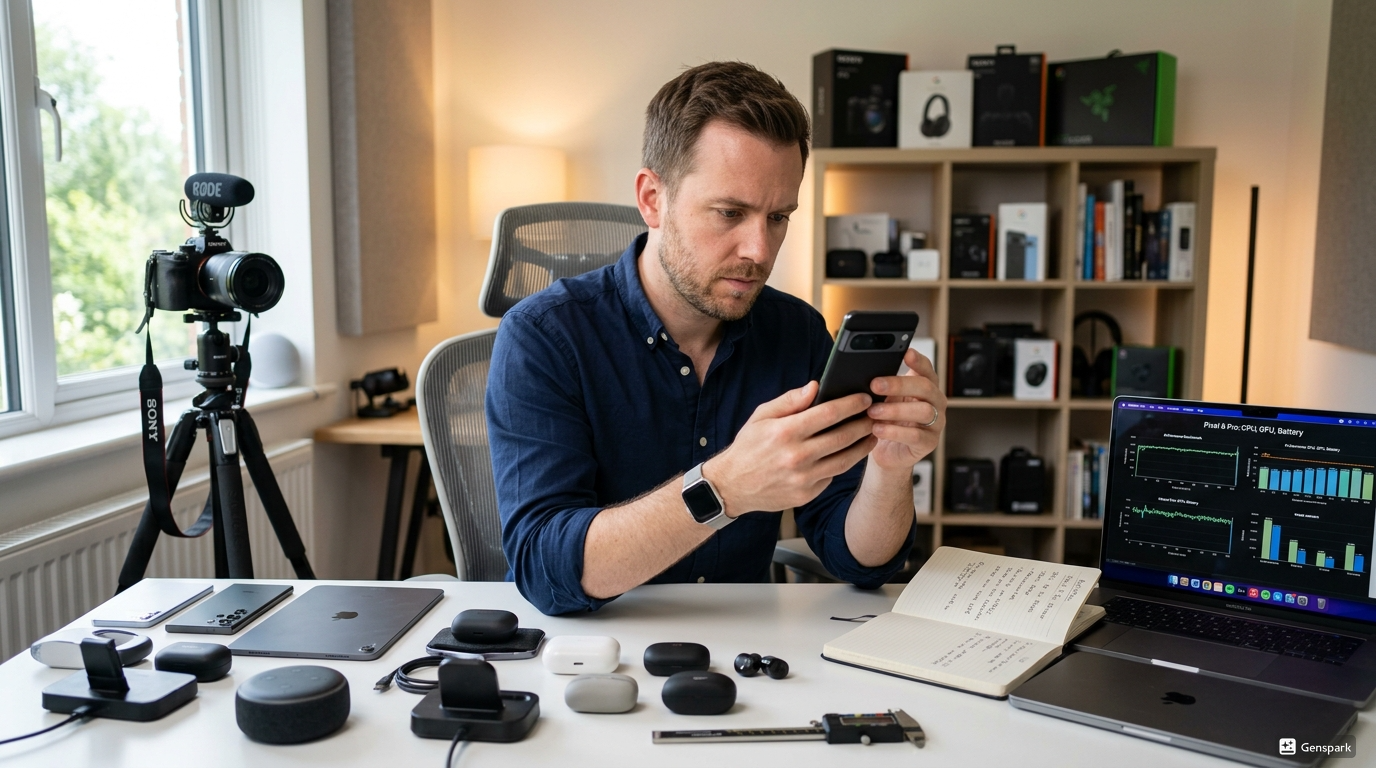
A few months ago I watched a popular YouTube tech channel give a ₹25,000 phone a glowing 9/10 — great camera, great battery, highly recommended. Then I read the Flipkart customer reviews for the same phone. Most common complaint: battery swells within 6 months and customer service doesn’t respond.
The channel got a free review unit and returned it after a week. Flipkart customers paid real money and lived with the phone for a year. That gap between review-unit experience and real-world experience is exactly what this guide is about.
Why Most Gadget Reviews Are Unreliable
Let me be honest about how the gadget review industry works — including this site.
Reviewers who receive free units and earn affiliate commissions when you buy are not necessarily dishonest. But their incentives point in one direction. A review that says “decent phone, not worth the price” earns zero affiliate income. A review that says “best in class, buy now” earns a cut of every sale.
The tell: if a reviewer has never given anything below 7/10, their scale is broken. Real products have real trade-offs. Anyone who tests 50 phones a year and loves 48 of them is not being straight with you.
The Five Tests That Actually Reveal a Gadget’s True Quality
1. Real-World Performance vs. Benchmark Performance
Benchmark scores — AnTuTu for phones, Cinebench for laptops, PCMark for tablets — measure peak performance under artificial, controlled conditions. They tell you almost nothing about how a device feels during normal use.
What matters more: how does the device perform after 20 browser tabs are open? Does a phone slow down during a 30-minute gaming session because the processor throttles due to heat? Does a laptop fan spin at maximum speed the moment you open a video editor? Does performance degrade after three months of use when the operating system has accumulated apps and updates?
When reading reviews, look for tests that describe sustained performance — not just the first-run score. A phone that scores 900,000 on AnTuTu but throttles to 60% performance after five minutes of gaming is worse in practice than one that scores 750,000 and sustains it. Reviewers who only report the peak score are giving you an incomplete picture.
2. Battery Life Under Real Conditions
Battery tests conducted by reviewers are notoriously optimistic because they run standardized loops — a video playing at fixed brightness in airplane mode — rather than how people actually use devices. In real life, you have notifications pinging, location services running, background apps syncing, and screen brightness responding to ambient light.
A phone rated at “18 hours video playback” might give a heavy user five to six hours of screen-on time. A laptop rated at “12 hours” might deliver eight under mixed workloads with Wi-Fi on.
The most useful battery figures come from reviewers who report screen-on time over multiple days of real use, or who run mixed workload tests that include browsing, calling, and occasional video. If a review only reports the manufacturer’s claimed figure without independent testing, treat it with scepticism.
3. Thermal Management and Long-Term Reliability
Heat is the silent killer of gadgets. A phone or laptop that runs hot damages its own battery over time, throttles performance, and in worst cases can cause component failure. It also simply feels uncomfortable to hold.
This is one area where user reviews on Flipkart, Amazon India, and GSMArena forums become genuinely valuable — because they represent months of use, not a three-day review window. Searching “[product name] heating issue” or “[product name] after 6 months” on Reddit or YouTube consistently surfaces real problems that professional reviews missed because those problems take time to develop.
Before buying any gadget above ₹20,000, spend 10 minutes reading one-star reviews on Flipkart. Filter for “verified purchase” only. Look for patterns — if twenty different people mention the same heating or display issue, it is real.
4. Software Quality and Update Track Record
Hardware specifications are meaningless if the software running on top is buggy, bloated, or abandoned after twelve months. This is particularly relevant in India, where mid-range Android phones from Chinese brands are heavily popular — and where software support histories vary dramatically.
Some manufacturers commit to three to four years of Android OS updates and five years of security patches. Others ship a device, provide one update, and move on. A phone with slightly slower hardware but a strong software support track record will outperform a faster phone running two-year-old software full of unpatched vulnerabilities.
When researching any Android phone, check the manufacturer’s stated update policy before buying. For comparison: Samsung now offers seven years of OS updates on its flagship and selected mid-range models; Google Pixel phones offer seven years; OnePlus and Motorola have improved but still trail. For budget phones under ₹15,000, check whether the device will receive Android 15 before committing.
5. After-Sales Service in India
This is the most India-specific factor and one that almost no international review covers at all. A gadget is only as good as the support you can get when something goes wrong — and service quality varies enormously by brand and by city.
Apple’s service network in India has expanded significantly, with 4,000+ authorised service providers and direct Apple Stores in Mumbai and Delhi. Samsung has one of the largest service footprints in the country, with centres in tier-2 and tier-3 cities. OnePlus, Nothing, and Realme have decent coverage in major metros but can be patchy elsewhere. Some imported brands sold through Amazon or Flipkart have no physical service centres at all — warranty claims require courier shipping to a single national service centre, which means weeks without your device.
Before buying, check: Is there an authorised service centre within reasonable distance? Is the warranty valid for India (grey market imports often carry international warranties that Indian service centres won’t honour)? What is the typical turnaround time for repairs?
What Genuinely Good Value Looks Like in the Indian Market Right Now
“Value for money” is perhaps the most overused phrase in gadget reviewing, applied to nearly every product regardless of whether it’s true. Here is what it actually means in the context of the Indian market in 2026:
Under ₹15,000 (smartphones): The Redmi Note 14 series and Realme 13 Pro represent the current benchmark for this segment — offering 50MP cameras, 5000mAh+ batteries, and 90Hz AMOLED displays. The genuine value question here isn’t whether the specs are good (they are, by 2026 standards), but whether software support and build quality will last two to three years, which is how long most Indians keep a phone in this price range.
₹15,000–₹35,000 (smartphones): This is where the value equation gets complicated. The iQOO Neo 10 and Nothing Phone 3a compete directly with the lower end of Samsung’s Galaxy A series and OnePlus Nord 4. The Chinese-brand phones typically offer faster processors and larger batteries; Samsung and OnePlus offer longer software support and more reliable service networks. Neither choice is wrong — it depends on how much you weight longevity versus day-one performance.
Truly wireless earbuds under ₹5,000: The boAt Airdopes 141 and OnePlus Nord Buds 3 Pro consistently outperform their price points on audio quality and call clarity. The Sony WF-C510 at around ₹4,500 offers noticeably better audio tuning than most Indian-brand options in this range. Avoid no-name brands at ₹499–999 regardless of review scores — build quality and touch control responsiveness degrade within months.
Laptops under ₹50,000: The most honest advice for this segment: avoid Windows laptops with less than 16GB RAM in 2026, as Windows 11 with modern browsers and productivity apps is uncomfortable on 8GB. The Acer Aspire Lite with AMD Ryzen 5 7520U and the Lenovo IdeaPad Slim 3 Gen 9 both hit this threshold at or near ₹45,000–50,000 and represent genuine value for students and light professionals. Chromebooks remain underrated for users whose workflow lives in the browser.
How to Evaluate Any Gadget Review Before Trusting It
When you land on a review page, run through these checks before forming an opinion based on it:
Check the date. A phone review from 18 months ago doesn’t reflect current software, current pricing, or what alternatives are now available at the same price point.
Check the testing duration. Was this a “hands-on” (a few hours with a pre-production unit) or a full review after weeks of use? The former is a first impression, not a verdict.
Check for quantified claims. “Great battery life” is meaningless. “5 hours 40 minutes of screen-on time under mixed workload” is data. Reviews that only use adjectives without numbers are not testing — they are describing.
Check what wasn’t tested. Was call quality tested? Drop resistance? Heating under gaming load? Long-term camera performance? Gaps in testing often reveal what a reviewer either didn’t bother with or found inconvenient to report.
Cross-check with user reviews at 3–6 months. GSMArena’s user reviews, Flipkart’s filtered verified reviews, and Reddit’s r/IndiaGadgetsReview are all worth scanning for a pattern of real-world complaints that professional reviews may have missed.
The One Question Every Review Should Answer
All the specs, scores, and comparisons lead to one central question that surprisingly few reviews address directly: Would you buy this with your own money at the current price?
That single question cuts through affiliate commissions, brand relationships, and the pressure to be nice. A reviewer who answers that honestly — including the cases where the answer is “no” — is worth reading again. A reviewer who never recommends against a purchase is reviewing for the brand, not for you.
When you read a gadget review, find that question. If it isn’t there, ask it yourself using everything the review gave you. That is what honest gadget evaluation looks like.
Quick Reference: How to Research Any Gadget Before Buying in India
| Step | What to Do | Where |
|---|---|---|
| Check full specifications | Compare against similarly priced competitors | GSMArena, Notebookcheck, 91mobiles |
| Read professional reviews | Look for real usage data, not just benchmarks | NDTV Gadgets 360, The Mobile Indian |
| Check user complaints | Filter verified purchases, look for patterns | Flipkart, Amazon India reviews |
| Search long-term issues | “[Product name] problem after 3 months” | Reddit r/IndiaGadgetsReview, YouTube |
| Verify service centres | Check brand’s official service locator | Brand website → Service/Support |
| Compare current prices | Check price history to avoid inflated “sale” pricing | Smartprix, PriceDekho |
My actual process when I research a gadget before buying:
I read one professional review for spec accuracy. Then I go to Flipkart and sort reviews by 3-star — not 5-star — and read 20 of them. Then I search “[product name] problems” on Reddit India and “[product name] after 6 months” on YouTube. That combination takes about 25 minutes and has saved me from several purchases that looked perfect in professional reviews but fell apart in real use.
Mahesh is a technology writer covering consumer electronics, gadget reviews, and digital trends for Indian audiences.
