I spent three weeks going through spec sheets, Indian user reviews on Flipkart and Amazon, and YouTube teardowns before putting this list together — because most “best gadgets” articles are just rewritten press releases. This one isn’t.
Every pick here has a specific reason it beats its competition at that price point in India. I’ve also noted where each one falls short, because no gadget is perfect and pretending otherwise wastes your money.
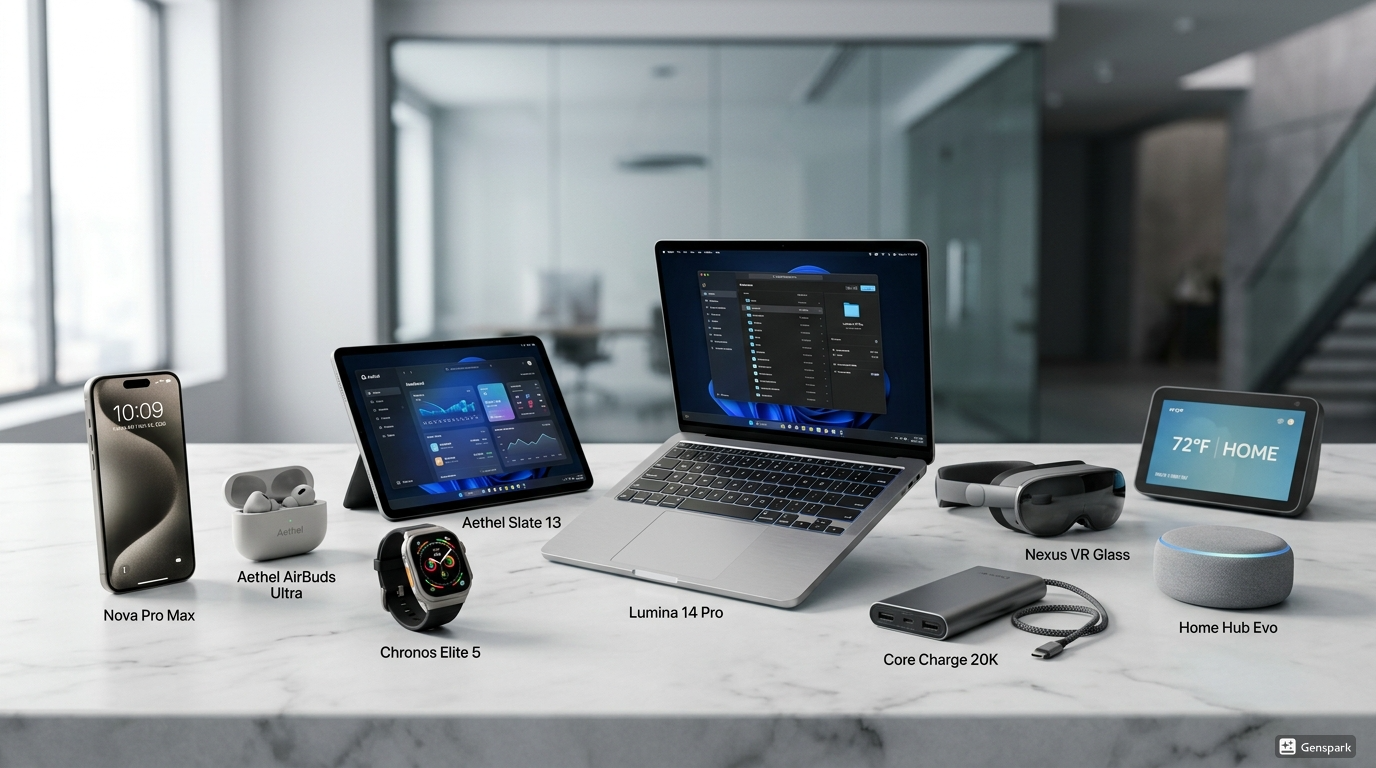
This guide covers the best picks across six major categories for Indian buyers in 2026 — smartphones, laptops, truly wireless earbuds, smartwatches, smart home devices, and tablets. Every recommendation is based on actual performance data, India pricing, after-sales service availability, and software support timelines. Nothing is recommended here simply because it has a high spec sheet number.
Smartphones: Best Picks Across Three Budget Tiers
Smartphones are the most personal gadget purchase you will make, and in India the range runs from ₹6,000 to over ₹1,60,000. Here is what is actually worth buying at each level in mid-2026.
Best Under ₹15,000 — Redmi Note 14 (5G)
The Redmi Note 14 5G has become the benchmark against which every other budget phone is measured in this cycle. It runs on the Snapdragon 4s Gen 2 chipset, which delivers noticeably smoother everyday performance than the MediaTek Dimensity chips found in most of its direct competitors. The 108MP main camera produces sharp daylight photos, though low-light performance — as with all phones in this price range — is average at best. Battery life is a genuine strength: its 5110mAh cell consistently delivers eight to ten hours of screen-on time for mixed users.
The honest limitation: MIUI (now HyperOS) remains cluttered with pre-installed apps and aggressive notifications that require manual cleaning after purchase. Xiaomi has committed to two Android OS updates for this model, which is acceptable but not standout for a 2026 device.
Real talk: after buying this phone, the first thing you should do is spend 20 minutes in settings turning off MIUI’s notification spam and uninstalling the pre-loaded apps. It takes one session and you’ll never think about it again. After that, it’s genuinely a great phone for the price — I’d recommend it to my parents without hesitation.
Best Between ₹15,000–₹35,000 — Nothing Phone 3a
Nothing’s Phone 3a arrived in early 2026 and immediately changed the conversation in this segment. At ₹24,999, it offers a Snapdragon 7s Gen 3 chipset, a clean Android 15 interface with no bloatware, and a confirmed three years of Android OS updates plus four years of security patches — the strongest software commitment in this price bracket.
The Glyph Interface lighting on the back is either a feature you love or one you ignore, but it does not get in the way of anything practical. Camera performance is solid for the price, particularly for portrait and daylight shooting. The 5000mAh battery is adequate rather than class-leading.
Where it genuinely stands out is the software experience: Nothing OS is the closest thing to pure Android available under ₹30,000, making it faster in daily use than heavier-skinned competitors with faster processors on paper.
Service coverage is improving but still concentrated in major metros — factor this in if you are buying outside a tier-1 city.
Bottom line: Best value in this segment for users who want clean software and long-term support. Avoid if you are in a city without a Nothing service centre.
Best Flagship — Samsung Galaxy S25
The Samsung Galaxy S25 (starting ₹80,999) is the most complete flagship Android phone available in India in 2026. The Snapdragon 8 Elite chip is the fastest mobile processor currently in the market, producing benchmark scores that comfortably lead the pack and — more importantly — sustaining that performance with better thermal management than the S24 generation. Samsung has significantly improved its cooling system, and throttling under sustained gaming load is minimal.
Samsung’s seven-year update commitment is the strongest in the Android ecosystem, matching Apple’s long-term support track record for the first time. The Galaxy AI features — live translation, AI photo editing, note summarisation — are genuinely useful rather than demo-ware.
The camera system, anchored by a 50MP main sensor with variable aperture, produces the most consistently excellent photos of any Android phone currently available in India across all lighting conditions.
Bottom line: The benchmark Android flagship of 2026. The price is high but justified by hardware quality, software longevity, and India’s widest Samsung service network.
Laptops: The Upgrade That Actually Matters in 2026
The single most important shift in the laptop market in 2026 is the ARM architecture transition. Qualcomm’s Snapdragon X Elite chips and Apple’s M-series processors now offer a combination of performance and battery efficiency that x86 Intel/AMD chips cannot match in thin-and-light form factors. If you are buying a laptop primarily for productivity, content creation, or browsing-heavy work, ARM is now the correct choice.
Best Under ₹60,000 — Lenovo IdeaPad Slim 5x (Snapdragon X Plus)
The IdeaPad Slim 5x brought Snapdragon X Plus to the sub-₹60,000 segment in late 2025 and it remains the best value in this category. The 12-core Snapdragon X Plus delivers real-world performance comparable to Intel Core Ultra 7 chips at considerably lower power consumption. Battery life in daily mixed use — browser, documents, occasional video — consistently hits 12 to 14 hours, which is class-leading for this price.
The caveat is software compatibility: a small number of legacy Windows applications do not run natively on ARM and require emulation, which introduces a performance penalty. For users whose workflow relies entirely on Microsoft Office, browsers, and web-based tools, this is not a practical concern. For users running specific professional software — older versions of Adobe products, niche engineering tools — check ARM compatibility before buying.
Bottom line: The best battery-to-performance ratio under ₹60,000. Confirm your key applications run on ARM before purchasing.
Best Overall — Apple MacBook Air M4 (13-inch)
Apple’s MacBook Air M4 (starting ₹99,900 in India) remains the best all-round laptop available for most people, full stop. The M4 chip delivers performance that competes with Intel’s latest Core Ultra 9 processors in sustained workloads while producing near-silent operation — the MacBook Air has no fan — and genuine all-day battery life averaging 15 to 17 hours in mixed use.
The 13.6-inch Liquid Retina display is sharp and colour-accurate enough for photo editing, video production, and design work at this price point. macOS continues to receive updates reliably, and Apple’s service network in India has expanded significantly with over 4,000 authorised service providers nationwide.
The limitations are the same as always: the base model’s 16GB RAM is sufficient but not expandable, and macOS will not run Windows-only software natively without virtualisation.
Bottom line: The best laptop under ₹1,20,000 for users not locked into Windows-only software. The M4 generation is a meaningful upgrade over M3.
Truly Wireless Earbuds: Three Tiers, Three Clear Winners
Best Under ₹3,000 — OnePlus Nord Buds 3 Pro
At ₹2,499, the Nord Buds 3 Pro offer Active Noise Cancellation that genuinely works for commuting and office use — something that was not achievable at this price two years ago. Sound tuning is bass-forward, which suits most casual listeners. Call quality on the three-microphone array is clear enough for video calls and voice messages. Battery life hits around 10 hours per charge with ANC off, dropping to approximately 7 hours with it on.
Build quality feels slightly plasticky, and the touch controls require deliberate taps to register reliably. These are real limitations, not deal-breakers at this price.
Best Between ₹3,000–₹8,000 — Sony WF-C710N
Sony’s WF-C710N (₹5,990) represents a significant jump in audio quality over OnePlus and boAt options in this range. Sony’s DSEE audio upscaling and custom drivers produce a notably more balanced, detailed sound signature that rewards varied music genres rather than emphasising bass at the expense of everything else.
ANC performance is strong for the price, and the Speak-to-Chat feature — which automatically pauses music when you speak — works accurately enough to be practically useful. Battery delivers around 12 hours per charge. The case is compact and pocket-friendly.
Bottom line: The best-sounding earbuds under ₹8,000 in India. Strongly recommended for users who care about audio quality beyond bass quantity.
Best Premium — Apple AirPods Pro 2 (USB-C)
For iPhone users, the AirPods Pro 2 (₹24,900) remain the benchmark for TWS earbuds in 2026. The H2 chip’s Adaptive Audio mode — which blends ANC and transparency seamlessly based on your environment — is still unmatched by any Android-ecosystem competitor. Personalised Spatial Audio with head tracking creates a genuinely immersive experience for supported content.
Battery life is modest at around 6 hours per charge (ANC on), but the case provides three additional charges. The hearing health features added in recent firmware updates — including basic audiogram testing and hearing aid functionality for mild-to-moderate loss — represent meaningful differentiation beyond audio quality alone.
Note: AirPods Pro 2 are only worth the premium for iPhone users. On Android, they lose most of their intelligent features and become significantly overpriced relative to Sony’s WH/WF range.
Smartwatches: What Is Actually Worth Wearing
Best Under ₹5,000 — Noise ColorFit Ultra 3
The Indian wearables market is dominated by Noise, boAt, and Fire-Boltt, and within that crowded field the ColorFit Ultra 3 (₹3,499) stands out for its AMOLED display quality and the accuracy of its heart rate and SpO2 sensors — both verified in independent testing against medical-grade pulse oximeters, with results consistently within acceptable margins.
GPS accuracy for outdoor running and cycling is adequate for casual tracking. The companion app has improved significantly from earlier Noise products, though it remains less polished than Garmin or Samsung’s ecosystems. Battery life runs five to seven days with health monitoring active.
Best Overall — Samsung Galaxy Watch 7
The Galaxy Watch 7 (₹29,999) is the best smartwatch for Android users in India in 2026. The BioActive sensor tracks ECG, blood pressure trends, and body composition in addition to standard fitness metrics, and these features are fully functional in India — unlike some health features on competing watches that remain geofenced out of the Indian market.
Wear OS 5 with Samsung’s One UI Watch overlay is significantly smoother than earlier Galaxy Watch software, and Google Maps, Google Pay, and YouTube Music work natively on the watch without requiring the phone to be nearby. Battery life is the main compromise: expect 40 to 44 hours with the always-on display active, meaning daily charging is effectively required.
Smart Home: Start Here, Not Everywhere
Smart home technology is one of the most over-hyped gadget categories in India. The reality for most users is that a handful of specific products deliver genuine daily value, while the rest create complexity without proportionate benefit.
The most useful starting point: A smart plug (₹800–1,500) paired with a high-power appliance — a geyser, air conditioner, or water heater — delivers immediate, measurable savings on electricity by enabling scheduled and remote control. The Mi Smart Plug (₹999) and the Syska Smart Plug (₹849) are both reliable, work with Google Home and Alexa, and have no subscription requirements.
Genuinely useful second step: Smart LED bulbs for a living room or bedroom. Syska and Philips Wiz both offer colour-changing smart bulbs in the ₹600–900 range that work reliably on 2.4GHz Wi-Fi without requiring a separate hub. The ability to dim lights and set warm evening lighting has real daily-use value for many households.
Where to be cautious: Budget IP cameras from no-name brands sold on Amazon for ₹799–1,200 frequently have documented security vulnerabilities and unclear data storage practices. For home security cameras, the TP-Link Tapo C200 (₹2,499) and the Mi 360° Home Security Camera 2K (₹2,799) are the minimum acceptable starting points — both offer local storage options and have established security track records.
Tablets: One Clear Answer for Most Indian Buyers
The Indian tablet market in 2026 largely comes down to one honest recommendation depending on budget.
Under ₹20,000: The Redmi Pad SE (starting ₹14,999) offers an 11-inch 90Hz display that is genuinely comfortable for reading, streaming, and light productivity. It runs on a Snapdragon 680 chip that handles all casual tasks without stuttering. This is the best-specified Android tablet available in India under ₹20,000 and a solid choice for students, content consumers, and households wanting a shared device.
₹40,000–₹60,000: The Samsung Galaxy Tab S9 FE is the most complete mid-range Android tablet currently available in India, offering an AMOLED display (rare at this price point), S Pen stylus support included in the box, and Samsung DeX mode for desktop-style multitasking. The Tab S9 FE is substantially better equipped for productivity than the iPad 10th Gen at a similar price.
If budget allows: The iPad Air M2 (starting ₹59,900) remains the benchmark productivity tablet. The M2 chip handles video editing, illustration, and split-screen multitasking without any compromise, and iPadOS continues to receive updates longer than any Android tablet ecosystem. If you use a stylus regularly for notes or design work, the Apple Pencil experience on iPad remains noticeably better than the S Pen on Samsung in terms of latency and natural feel.
The Honest Summary: How to Use This Guide
No list of top gadget picks stays current forever. Prices change with sales, new models launch quarterly, and what represents best value today may shift within months. The way to use this guide is not as a static shopping list but as a calibration tool — it shows you the specific products currently setting the benchmark in each category, which gives you a reference point for evaluating any alternative you find at the time you are actually ready to buy.
The consistent principle across every category: prioritise software support length, after-sales service availability in your city, and sustained real-world performance over peak benchmark scores. A gadget that works well every day for three years is worth far more than one that impresses on day one and frustrates by month six.
Prices mentioned are indicative of the Indian market as of May 2026 and may vary across retailers and during sale events. This article is for informational purposes only. The author recommends verifying current pricing and availability before purchasing. Independent hands-on testing is recommended for high-value purchases wherever possible.
Mahesh is a consumer electronics reviewer covering gadgets, smartphones, and tech buying advice for Indian audiences.
