
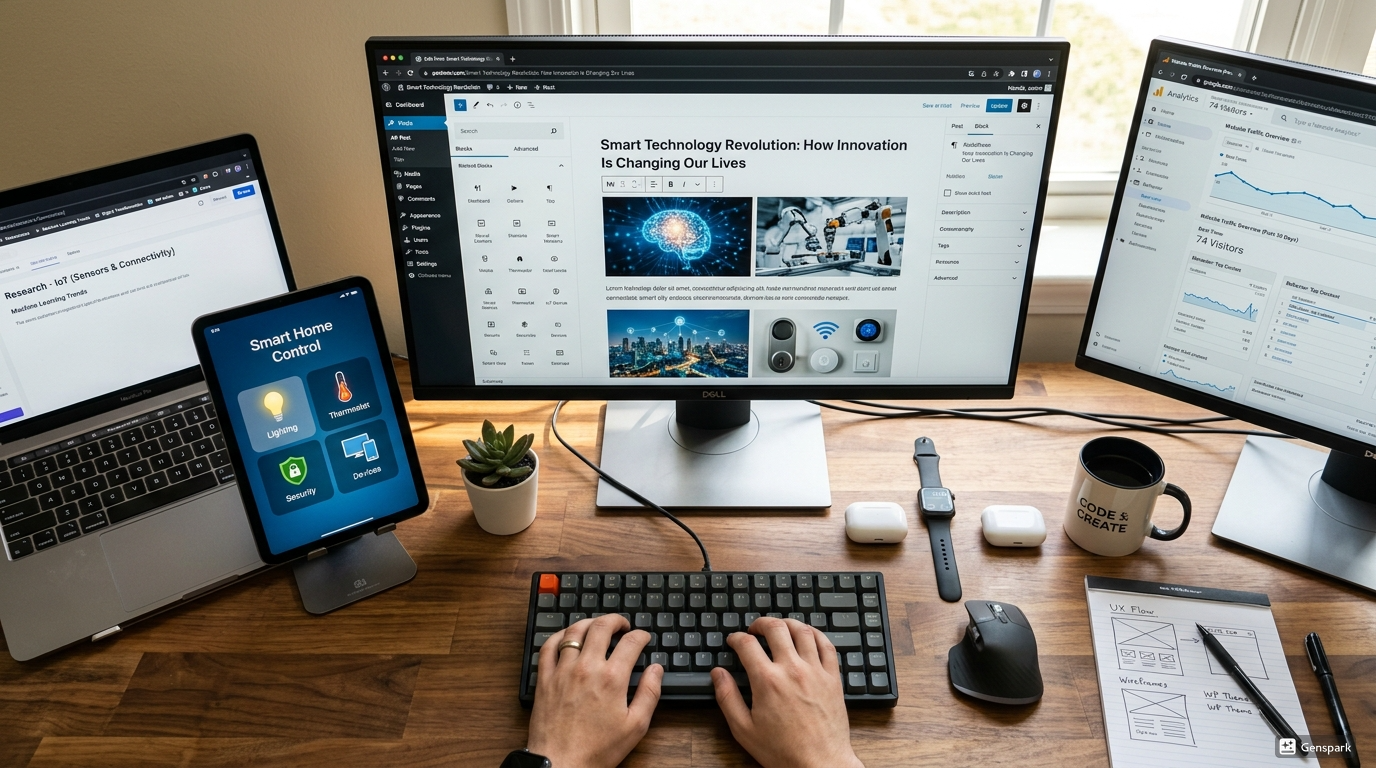
Introduction: The Rise of Smart Living
In 2026, technology is no longer just a tool—it has become an integral part of our everyday lives. From smart homes and wearable devices to AI-powered assistants, innovation is transforming how we live, work, and interact with the world.
This shift is often called the smart technology revolution, where devices and systems are becoming more intelligent, connected, and responsive. Understanding this transformation helps us adapt and make the most of modern advancements.
What Is Smart Technology?
Smart technology refers to devices and systems that use:
- Artificial Intelligence (AI)
- Internet connectivity
- Automation and sensors
- Data analysis and machine learning
These technologies allow devices to learn, adapt, and operate with minimal human input.
Smart Homes: Convenience and Control
Smart homes are one of the most visible examples of this revolution.
- Voice-controlled assistants
- Automated lighting and temperature control
- Smart security systems
Insight: Smart homes provide convenience, energy efficiency, and improved security.
Impact: Daily tasks become easier and more efficient.
Smartphones: The Hub of Smart Technology
Smartphones continue to evolve as central devices in our digital lives.
- AI-powered features
- Seamless integration with other devices
- Enhanced performance and connectivity
Insight: Smartphones act as control centers for smart ecosystems.
Impact: Greater connectivity and convenience.
Wearable Technology: Health and Fitness Tracking
Wearables are transforming personal health management.
- Real-time health monitoring
- Fitness tracking and coaching
- Sleep and stress analysis
Insight: Users can track and improve their health more effectively.
Impact: Increased awareness and healthier lifestyles.
Smart Workplaces: Productivity and Efficiency
Work environments are becoming smarter with technology.
- Remote collaboration tools
- Automation of repetitive tasks
- AI-driven decision-making
Insight: Smart workplaces improve efficiency and flexibility.
Impact: Better work-life balance and productivity.
Smart Cities: The Future of Urban Living
Cities are adopting smart technologies to improve infrastructure.
- Intelligent traffic systems
- Smart energy management
- Digital public services
Insight: Smart cities aim to enhance quality of life.
Impact: Safer, cleaner, and more efficient urban environments.
Artificial Intelligence: Powering Innovation
AI is the backbone of smart technology.
- Personalized recommendations
- Automation of complex processes
- Data-driven insights
Insight: AI enables smarter and faster decision-making.
Impact: Improved efficiency across industries.
Internet of Things (IoT): Connected Ecosystems
IoT connects devices to create seamless experiences.
- Devices communicate and share data
- Automation of everyday tasks
- Integration across platforms
Insight: IoT creates a unified digital environment.
Impact: Greater convenience and control.
Benefits of Smart Technology
- Increased convenience and efficiency
- Improved decision-making
- Enhanced security
- Better resource management
- Personalized user experiences
Smart technology simplifies life while improving productivity.
Challenges of Smart Technology
Despite its advantages, smart technology presents challenges:
- Privacy and data security concerns
- Dependence on internet connectivity
- High costs of advanced devices
- Compatibility issues between systems
Understanding these challenges helps in making informed decisions.
How to Adapt to the Smart Technology Revolution
To make the most of smart technology:
- Stay informed about new innovations
- Choose devices that fit your needs
- Learn how to use smart tools effectively
- Prioritize security and privacy
Adaptability is key to benefiting from technological advancements.
Future of Smart Technology
The future will bring even more advanced innovations:
- Smarter AI systems
- Fully connected ecosystems
- Enhanced automation
- Greater focus on sustainability
Smart technology will continue to shape the way we live and interact.
Conclusion: Embracing a Smarter Future
The smart technology revolution is transforming every aspect of our lives. From homes and workplaces to cities and healthcare, innovation is creating a more connected and efficient world.
👉 By embracing smart technology and using it responsibly, we can enjoy its benefits while minimizing risks.
Frequently Asked Questions (FAQs)
Q1: What is smart technology?
Smart technology refers to devices and systems that use AI, connectivity, and automation to operate intelligently.
Q2: How is smart technology changing daily life?
It improves convenience, efficiency, and personalization in activities like communication, work, and home management.
Q3: What are examples of smart technology?
Smartphones, smart homes, wearable devices, and connected appliances are common examples.
Q4: Is smart technology safe to use?
Yes, but users should follow security practices to protect their data and privacy.
Q5: What is the role of AI in smart technology?
AI enables devices to learn, adapt, and make intelligent decisions.
Q6: What are the challenges of smart technology?
Challenges include privacy concerns, high costs, and dependency on internet connectivity.
Q7: How can I start using smart technology?
Begin with basic devices like smart speakers or wearables and gradually expand your setup.
Q8: What is the future of smart technology?
It will involve more advanced AI, better connectivity, and increased integration across devices.

